What is GEO? Generative Engine Optimization Complete Guide

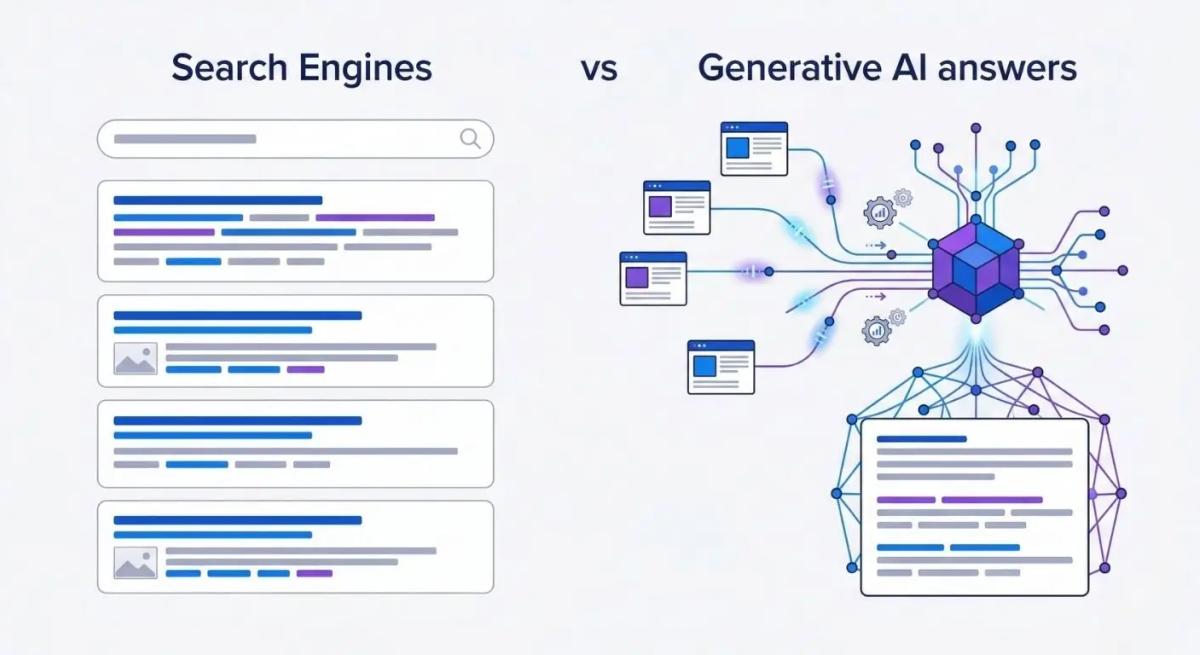
When you ask ChatGPT "recommend a reliable web designer in Istanbul," it mentions a name. When you ask Perplexity "who is an AI consultant," it references someone. When Claude queries a service, it lists specific companies. These recommendations aren't random — there's a structure determining which sources get referenced. Understanding and building this structure in your favor is GEO.
What is GEO?
GEO (Generative Engine Optimization) is an optimization strategy that enables generative AI models like ChatGPT, Google Gemini, Perplexity, and Claude to reference your site when generating answers to user questions. Traditional SEO makes your site visible in search results, AEO gets you into answer boxes — GEO ensures AI shows you as a source in its generated responses.
Let's explain with a concrete example. When a user asks ChatGPT "how do I implement AEO on my website?", ChatGPT generates a paragraph and lists its sources. Getting your site into that source list requires GEO work. This isn't just about content quality — it's about identity clarity, trustworthiness signals, and structural definition.
The Difference Between GEO, SEO, and AEO
These three disciplines aren't competitors but complements. However, their goals, methods, and impact areas differ.
| SEO | AEO | GEO | |
|---|---|---|---|
| Goal | Top position in search rankings | Source in answer boxes | AI model reference list |
| Engines | Google, Bing, Yandex | SGE, Featured Snippets | ChatGPT, Gemini, Perplexity, Claude |
| Core Method | Backlinks, keywords | Q&A format, schema | E-E-A-T, entity clarity, llms.txt |
| Success Metric | Clicks, position | Citations, snippets | References, mentions |
| Timeline | 3-6 months | 2-4 months | 2-6 months |
Important note: GEO can't stand without SEO and AEO foundations. AI models search the web index when looking for reference sources — if you're not in that index, you can't get referenced. GEO is the top layer built on SEO and AEO.
Which AI Engines Fall Under GEO?
As of 2026, the main generative AI platforms targeted by GEO are:
ChatGPT (OpenAI): The world's most widely used generative AI model. Web browsing features and GPT Store applications can scan current web content. It cites specific sources when answering user questions and lists them.
Google Gemini: Google's generative AI model. Since it can directly use Google's search index, it naturally advantages sites strong in SEO. However, getting referenced without E-E-A-T signals and structured data is still difficult.
Perplexity AI: An increasingly popular platform that answers with sources. The most measurable platform for GEO — the source list is clearly visible below answers. It can suggest names when asked "who is an expert on this topic?"
Claude (Anthropic): A model notable for its long context window and analytical capabilities. Particularly high tendency to cite sources in professional and technical questions. Sensitive to trustworthiness signals.
Microsoft Copilot: Built on Bing's index, widely used assistant in Microsoft's ecosystem. Sites strong in Bing have advantages in Copilot too.
How Do AI Engines Select Reference Sources?
AI models conduct multi-layered evaluation when selecting reference sources. Understanding these layers is the foundation of GEO strategy.
E-E-A-T Signals
Google's Experience, Expertise, Authority, and Trust framework plays a decisive role in how AI models evaluate source trustworthiness. First-hand experience evidence, technical expertise depth, industry recognition, and transparent identity information strengthen these signals.
Let's explain with concrete examples. "I've been a web designer for 20 years" is general and unprovable — a weak E-E-A-T signal. "I've worked with companies like Joypark, Bemka Cable, and MTK Bearings since 2004" is specific, verifiable, and strong. The second sentence helps AI conclude "this person actually does this work."
Entity Clarity
AI models think in terms of "entities." An entity can be a person, organization, place, concept, or service. What's critical for GEO is clearly defining which entities your site represents.
"Doruk Sucuka" is a person entity. "AEO" is a concept entity. "Istanbul" is a place entity. The connection between these three entities is established through schema markup and consistent content. When an AI model queries "AEO expert in Istanbul," it needs to find you at the intersection of these three entities.
Content Consistency
AI models check whether information across different pages of your site is consistent. If your About page says "I've been a freelance web designer for 20 years" but LinkedIn says "15 years of experience," this contradiction lowers your trust score.
The sameAs schema property structurally establishes this consistency. If you mark your LinkedIn, GitHub, and Twitter profiles on your website, the AI model cross-references information in these profiles with your website. Consistency raises trust score, contradiction lowers it.
Citability
AI models prefer content they can cite as sources. General statements like "web design is very important" can't be cited — everyone says it. Specific, assertive, and verifiable statements like "without schema markup, AI engines must guess at content context" can be cited.
Every paragraph should pass the test: "would an AI model want to show the source when communicating this sentence to a user?" General information and clichés can't pass this test.
Core Implementations for GEO
GEO isn't an abstract concept — it's implemented through concrete technical and content decisions.
llms.txt File
The llms.txt file is an identity document in plain text format that introduces your site and content to AI models. Think of it as the AI crawler version of robots.txt. This file sits at the domain root (domain.com/llms.txt) and contains:
- Site and owner identity
- Areas of expertise
- Services or content offered
- Content usage permissions
As of 2026, llms.txt isn't yet a universal standard — but Anthropic, OpenAI, and other major players are moving in this direction. Early adopters gain advantage.
Extended Person/Organization Schema
Person or Organization schema in JSON-LD format is GEO's technical backbone. However, a minimalist schema isn't enough — extended fields must be used.
The knowsAbout field lists your areas of expertise. The sameAs field adds social profile and external verification links. The hasOfferCatalog field structurally defines services you offer. These fields provide machine-readable answers to "what does this person/organization do, what do they know, where are they located?" for the AI model.
Citable Content Production
Every content block should pass "can an AI model cite this when communicating to users?" For this, content should have these qualities:
- Specific and assertive (not general information)
- Verifiable (measurable data, concrete examples)
- Unique perspective (doesn't repeat what everyone says)
- Clearly attributable (can be referenced at section or paragraph level)
"Web design is important" can't be cited. "Sites without schema markup force AI engines to guess at content context" can be cited.
Identity Consistency with sameAs
Information you write on your website, LinkedIn, GitHub, and other professional platforms must be consistent with each other. AI models follow the sameAs chain to verify identity. If inconsistency is detected, trust score drops.
Simple check: if your website says "since 2004," LinkedIn should say the same year. There should be no contradictions in basic information like title, location, and areas of expertise.
E-E-A-T Pages
About, references, and portfolio pages are the heart of GEO. These pages structurally and contentually answer "is this person/organization real, trustworthy, expert?" Real project names, customer testimonials, concrete results, and dates should be on these pages.
How to Measure GEO Results
There isn't yet a tool ecosystem as mature as SEO for GEO measurement — but these methods work.
Manual AI Tests: The simplest but most effective method. Enter queries in your expertise area into ChatGPT, Perplexity, and Claude. "Recommend web designer in Istanbul," "who knows about AEO," "GEO consultant in Turkey" — try such queries. Do your site or name appear in answers?
Referral Traffic Tracking: Track referral traffic from Perplexity, ChatGPT, and similar platforms in Google Analytics. If these sources are appearing in your traffic, your GEO efforts are starting to pay off.
Brand Mention Tracking: Track how often your site or personal brand is mentioned in AI answers. You can do searches like "your name + ChatGPT" or "your name + Perplexity" with Google Alerts-like tools.
When Do Results Appear? llms.txt and schema updates start getting scanned in 2-4 weeks. E-E-A-T strengthening and regular referencing typically become measurable within 2-6 months. GEO is a strategy requiring patience — but early entrants gain long-term advantage.
GEO Opportunity in Turkey
The number of sites and professionals implementing GEO in Turkey as of 2026 is extremely low. ChatGPT and Perplexity are already indexing Turkish content — but there are almost no sources they can reference for queries like "AEO expert in Istanbul" or "GEO consultant Turkey."
This delayed adoption is actually a window of opportunity. While GEO competition is heating up in global markets, Turkey still has blue oceans. A site with llms.txt file set up, Person schema extended, and E-E-A-T pages organized can gain tremendous visibility advantage right now.
Especially B2B services, consulting, freelance professionals, and niche expertise are sectors that can most efficiently use this opportunity. When "who knows about this topic?" questions start being asked of AI, those unprepared will face invisibility risk.
Next Step: Is Your Site Ready for GEO?
There's a technical and strategic distance between understanding GEO and implementing it. llms.txt setup, schema extension, E-E-A-T strengthening, and content consistency checks require different roadmaps for each site.
If you want to learn how AI models currently perceive your website, you can start with AI Readiness Analysis. We assess your current GEO status and present gaps as a prioritized list.
Frequently Asked Questions
What's the fundamental difference between GEO and SEO? SEO ensures your website ranks high in search engines like Google and Bing. GEO ensures generative AI models like ChatGPT, Gemini, and Perplexity show you as a reference source. SEO is a "being found" strategy, GEO is a "being referenced" strategy. They work together — GEO can't stand without SEO foundation.
How long do GEO efforts take? Technical changes (llms.txt, schema) start getting scanned in 2-4 weeks. E-E-A-T strengthening and regular referencing become measurable within 2-6 months. GEO isn't a one-time project but a continuously updated strategy.
Can small businesses do GEO? Yes — and in some ways they have advantages over large businesses. GEO requires proper configuration and identity clarity, not large budgets. A small site with niche expertise can outperform a large disorganized site in GEO performance. What matters is authority and consistency, not traffic volume.
Is llms.txt mandatory? Not mandatory as of 2026 — but a strong signal. This standard proposed by Anthropic hasn't yet been universally adopted, but there's rapid movement in this direction. Early adopters gain advantage by signaling "this site is specially prepared for AI." GEO can be done without llms.txt but it's harder.
How do I know if ChatGPT is referencing me? The simplest method is manual testing. Ask ChatGPT queries in your expertise area: "recommend web designer in Istanbul," "who is source on AEO," "freelance developer in Turkey." If your name or site appears in answers, you're being referenced. Also, traffic from "chatgpt.com" or "perplexity.ai" can be tracked in Google Analytics.
Doruk Sucuka is an Istanbul-based freelance web developer and AI consultant. Working in web design and software since 2004, Sucuka provides services in GEO, AEO, and AI integration. → About